
Last Updated: November 19, 2026
Quick Summary
To judge clothing quality, inspect the fibre composition, fabric weight and construction details rather than marketing language, then check seams, stitching and fastenings in person. Turn garments inside out to look for clean overlocking, consistent stitch length and flat, untwisted hems. These checks take minutes and reveal how long a piece will actually last.
- Read the fibre composition panel and fabric weight in g/m² before trusting any description.
- Search reviews for words like pilled, seam, shrank and returned to spot failure patterns.
- Hold fabric to light to test opacity, and stretch cuffs to check elastane recovery.
- Judge quality relative to price through cost per wear, not the shelf price.
- Inspect a new piece at one month, three months and one year of regular wear.
Table of Contents
- Why Clothing Quality Matters More Than Ever
- How to Judge Clothing Quality Online Without Touching the Fabric
- High Quality Materials for Clothing: What to Look For
- Your Fabric Quality Chart: Weight, Density and Opacity
- The Best Quality Fabrics for Clothes That Last
- Checking Seams, Stitching and Construction
- Fastenings, Linings and the Details That Matter
- A Repeatable Garment-by-Garment Inspection Checklist
- Quality Relative to Price and Cost Per Wear
- Care, Laundering and Long-Term Wear Tests
- Frequently Asked Questions
Why Clothing Quality Matters More Than Ever
Durability has become a live consumer concern rather than a niche one. According to Cotton Incorporated's Durability Survey 2026 - US, researchers now track the average number of years garments are worn before being considered worn out, broken down by garment type. That shift matters: when buyers keep clothes longer, the difference between a garment that survives three seasons and one that pills by March becomes a financial question, not just an aesthetic one. For a deeper comparison of durable gear versus fast fashion, read quality outdoor gear vs fashion: what actually lasts.
At Top on the Top, we build mountain-inspired lifestyle wear for people who want pieces that work on a weekend trail and on a city street. That dual demand makes clothing quality the central question. Learning how to judge clothing quality is a skill, and it is one most shoppers never formally learn.
Below, we will show you exactly how to assess fabric, seams, fastenings and construction, both in person and from a product page. The checks take minutes and save money for years.
Research published in the Journal of Fashion Marketing and Management identified five distinct approaches experts use to assess sports clothing quality, from conventional textile testing to wear trials. You will not run a lab test at home. You can, however, borrow the logic behind those methods.
How to Judge Clothing Quality Online Without Touching the Fabric
Judging clothing quality online means reading fibre content, fabric weight, construction notes and review patterns as evidence, then treating marketing language as the least reliable signal on the page. The product listing usually contains enough technical detail to separate a durable garment from a disposable one, if you know which lines to read.
Reading Between the Lines of Product Listings
Start with the fibre composition panel, not the description. A listing that states "100% organic combed ring-spun cotton" and a fabric weight in grams per square metre is giving you verifiable specifications. A listing that says only "premium cotton blend" is telling you nothing.
Look for these specifics:
- Fibre percentages for every component, including linings and trims
- Fabric weight stated in g/m² or oz/yd²
- Named construction details such as double-needle topstitch or taped neck and shoulders
- Certification references, for example GOTS, OCS or OEKO-TEX STANDARD 100
- Country of manufacture and, ideally, the factory
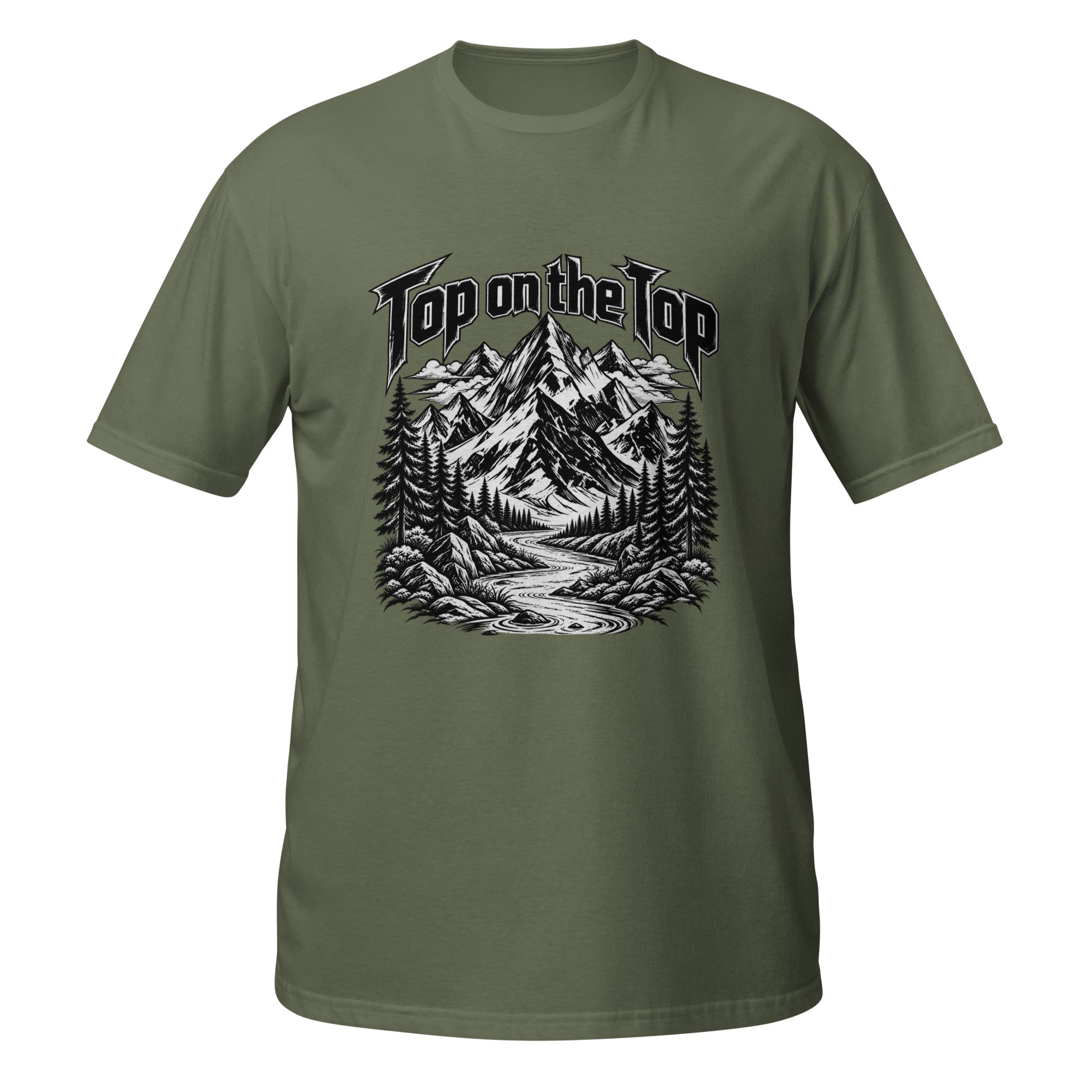
Our Unisex Organic Cotton Creator 2.0 T-Shirt illustrates the principle: its listing states 100% organic ring-spun cotton, a 180 g/m² single jersey, a 1 × 1 rib collar and wide double-needle topstitch on sleeves and hems. Those are checkable facts, not adjectives.
What Photos and Reviews Reveal
Zoom into product photography at the collar, cuff and hem. You are looking for puckering, uneven topstitch lines and thin fabric that shows the background through it. A single flat-lay shot with no detail images is a warning sign in itself.
Reviews reward pattern-reading. Ignore the five-star one-liners and search for words like "pilled", "seam", "shrank" and "returned". Three mentions of the same failure in twenty reviews is a pattern, not bad luck.
High Quality Materials for Clothing: What to Look For
High quality materials for clothing are identified by fibre type, staple length, yarn construction and finish, not by price or brand. Natural fibres generally offer breathability and comfort, synthetics offer strength and quick drying, and the best technical garments often combine both deliberately.
Natural Fibres and Their Properties
Cotton is soft, breathable and takes dye well. Combed and ring-spun cotton removes short fibres, producing a smoother, stronger yarn that resists pilling better than open-end cotton. Long-staple varieties outperform short-staple ones on both durability and hand feel.
Wool regulates temperature and resists odour, which is why it dominates in mountain layering. Merino's fine fibres reduce itch, though fine wool is also more fragile under abrasion.
Linen is strong when wet and highly breathable, but creases readily and has little stretch. Silk offers excellent drape and a smooth texture at low weight, with limited abrasion resistance.
Synthetic Fibres and Blends
Polyester is durable, quick-drying and cheap to produce, but traps odour and can feel clammy against skin. Nylon beats polyester on abrasion resistance, which is why it appears in packs and outer shells. Elastane adds stretch and recovery in small percentages.
Blends exist to solve specific problems. A cotton-polyester mix shrinks less and creases less than pure cotton, at the cost of breathability. For a deeper look at fibre choices with lower environmental impact, see our guide to sustainable fabrics for activewear.
Your Fabric Quality Chart: Weight, Density and Opacity
Fabric weight tells you how a garment will behave before you ever wear it. The table below maps common weights to typical uses, so you can match a fabric to the job rather than guessing from a photo.
| Fabric Weight | Typical Garment | Opacity | Best For |
|---|---|---|---|
| 150-160 g/m² | Lightweight tee | Can be semi-sheer in white | Summer base layers, layering |
| 170-180 g/m² | Midweight tee | Opaque in most colours | Everyday wear, year-round |
| 200 g/m² and above | Heavyweight tee | Fully opaque | Streetwear, standalone tops |
| 250-300 g/m² | Fleece, midlayer | Opaque | Cool-weather insulation |
Density and opacity are related but not identical. A tightly knitted fine-gauge fabric can be opaque at low weight, while a loose knit at the same weight shows everything underneath. Hold fabric up to light: if you can read your hand's outline clearly, expect the same in daylight.
Drape and hand feel complete the picture. Pick up a hem and let it fall. Fabric that hangs stiffly may be heavily finished; fabric that collapses instantly may lack body. Neither is wrong, but each suits different garments.
The Best Quality Fabrics for Clothes That Last
The best quality fabrics for clothes that last are those matched to the garment's actual use: dense cotton jersey for everyday tops, nylon blends for abrasion-prone outerwear, and wool for temperature-regulating layers. Durability comes from fibre choice, yarn structure and fabric density working together, not from any single "best" material.
Heavier organic cotton jersey generally holds its shape and opacity better than lighter weights. Our Unisex Organic Oversized High Neck T-Shirt uses a 1 × 1 rib collar and self-fabric neck tape.
For outer layers, look at the shell and lining as separate decisions. Our Liner Sherpa Jacket pairs a bonded sherpa shell in 100% recycled polyester with an anti-pilling polar fleece lining, plus a Vislon® zip and recycled elastic cuffs.
Shape retention, stretch and recovery separate good fabrics from poor ones. Stretch a cuff and release it. Quality elastane snaps back; cheap elastane sags and stays stretched.
Checking Seams, Stitching and Construction
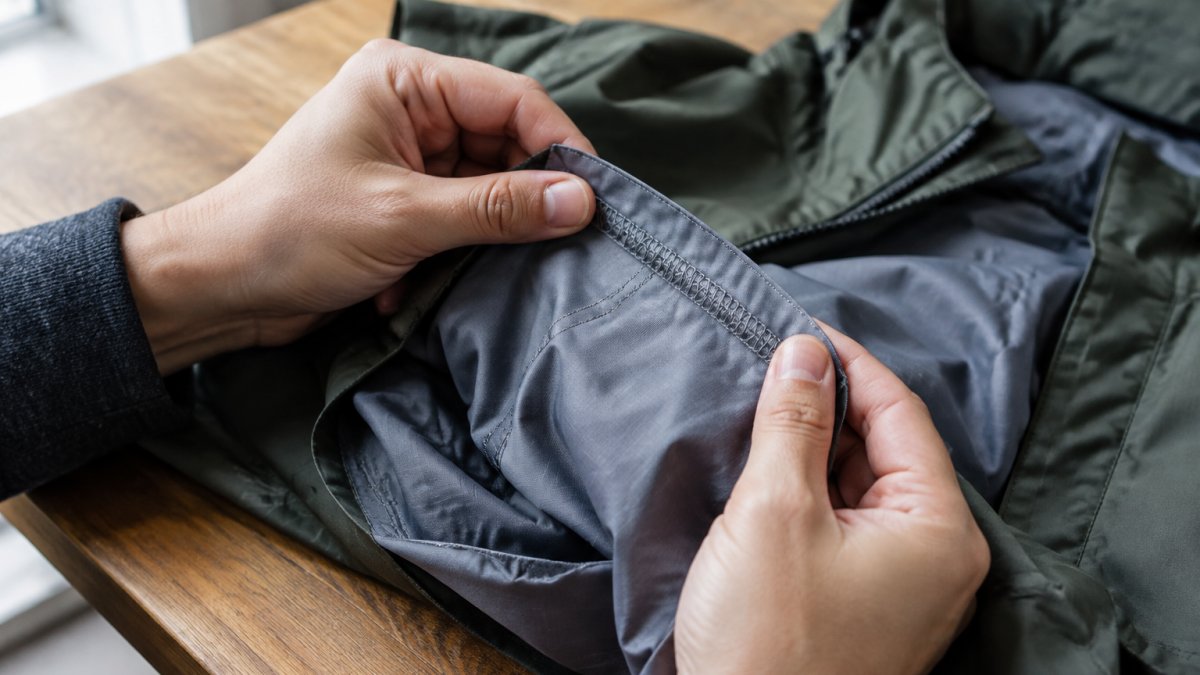
Seam and stitch inspection is the fastest quality test available to any shopper. Turn the garment inside out and examine the seams first: clean overlocking, consistent stitch length and no loose threads indicate a controlled production line. Uneven, wavy or skipped stitching indicates the opposite.
Stitch Density and Consistency
Stitch density is measured in stitches per inch. Higher density generally means a stronger seam, up to the point where the fabric perforates and weakens. Compare the same seam across its length: consistency is the real tell, because a machine running correctly produces uniform stitches throughout.
A common mistake is checking only the outside. The inside seam allowance shows whether the maker trimmed and finished properly or left raw edges to fray.
Hems, Edges and Seam Finishes
Hems should sit flat with no twisting. A twisted hem usually means the fabric was cut off-grain, and it will never hang straight no matter how you press it. Look for double-folded hems, bartacks at stress points and reinforced pocket mouths.
Pattern matching matters on printed and checked fabrics. Stripes that misalign at the side seam signal a rushed cut. The Unisex Classic Tee lists taped neck and shoulders and double seams at the sleeves and bottom hem.
Fastenings, Linings and the Details That Matter
Fastenings fail before fabric does, so test every zip, button and buttonhole before buying. A zip should run smoothly without catching, and the pull should feel solid rather than flimsy. On jeans and jackets, look for a zip that is set straight and secured with a bar tack at the base of the opening.
Buttons should be sewn with a shanked thread so they sit above the fabric, and buttonholes should be dense and cleanly edged rather than loose and fraying. Test a buttonhole by fastening and unfastening it a few times: if the edges fray immediately, the stitching is too sparse. On tailored pieces, check that buttons are anchored with a small backing button or reinforced thread behind the fabric.
Lining quality separates considered garments from cheap ones. A lining should be smooth, attached without puckering and generous enough not to pull at the shoulders. Look for a pleat or box pleat at the centre back of the lining, which allows movement without tearing. Interfacing, the hidden material that gives collars and plackets their structure, shows itself in how a collar sits: limp and collapsing, or crisp and holding shape. Fusible interfacing can bubble after repeated washing if it was poorly applied, so check for any rippling on the inside of the collar stand.
Canvas construction in tailored pieces adds shape and longevity, though it needs dry cleaning care. On technical wear, check that pocket zips are covered and that cuffs and hems use elastic with real recovery. Stretch a cuff and release it: quality elastane snaps back, while cheap elastane sags and stays stretched.
A Repeatable Garment-by-Garment Inspection Checklist
Use the same sequence every time and inspection takes under five minutes. Work top to bottom, outside then inside:
- Collar and neckline: rib recovery, no puckering, neck tape present
- Shoulders: taped or reinforced seams, no stretching
- Sleeves: even set-in, double-needle topstitch, clean cuffs
- Side seams: straight, matched pattern, no twisting
- Fastenings: zip runs freely, buttons secure, buttonholes dense
- Pockets: reinforced mouths, hidden zips sit flat
- Hems: flat, double-folded, no twisting
- Inside: overlocked seam allowances, no loose threads
- Care label: fibre content, washing instructions, origin
- Fabric test: hold to light, stretch and release, rub gently for pilling
If you want a simple garment to practise the full sequence on, the Short-Sleeve Unisex T-Shirt lists shoulder-to-shoulder taping, quarter-turned construction and double stitching at the neckline and sleeves.
Quality Relative to Price and Cost Per Wear
Quality relative to price is best judged through cost per wear, not the shelf price. Divide the price by the number of times you expect to wear the item. For example, a jacket worn 150 times costs far less per wear than one worn 20 times, regardless of the price tag.
That arithmetic reframes the premium question. Higher prices buy better fibre, tighter construction and longer service life, but only when those things are actually present. Check the garment against the criteria above before accepting any premium.
For a practical framework on spotting pieces that repay their price, read our breakdown of the signs technical outdoor gear is worth the investment. Nottingham Trent University research on clothing longevity, which involved interviews with 31 industry practitioners and three consumer focus groups, examined how design and testing decisions affect how long garments last (clothing longevity research).
Care, Laundering and Long-Term Wear Tests
Care determines whether good construction survives. Washing at lower temperatures, turning garments inside out and skipping the tumble dryer all extend fabric life measurably. Pilling, snags and bubbling usually trace back to abrasion in the wash rather than to the fabric itself.
Read the care label before purchase, not after. A garment requiring dry cleaning carries an ongoing cost that belongs in your cost-per-wear calculation. Check colourfastness by rubbing a hidden seam with a damp white cloth: dye transfer signals trouble. For wool and cashmere, hand wash in cool water with a pH-neutral detergent and dry flat away from direct heat; for technical synthetics, use a technical wash rather than standard detergent, which can leave residues that attract odour and impair wicking.
Fibre-specific care matters more than most shoppers realise. Elastane degrades with chlorine and high heat, so swimwear and stretch activewear should be rinsed in cool water after use and dried away from radiators.
Long-term wear tests are the honest measure. Rotate a new piece into regular use and inspect it at one month, three months and one year, checking seams, cuffs and high-abrasion areas each time. Keep a simple note of any pilling, seam slippage or colour fade. A garment that shows visible pilling after five washes is unlikely to last two seasons, while one that still holds its shape after twenty washes is a genuine keeper. For laundering techniques that protect technical fabrics and waterproof finishes, see our guide on how to clean technical apparel without ruining waterproofing.
Judging clothing quality comes down to evidence: fibre content, fabric weight, stitch consistency, fastening reliability and honest care requirements. Top on the Top builds mountain-inspired pieces with those specifications stated openly, from 200 g/m² organic cotton jersey with GOTS and OCS certified fibre to a sherpa jacket with an anti-pilling fleece lining and Vislon® zip. Get started with Top on the Top and choose garments you can inspect, verify and wear for years rather than seasons.
Frequently Asked Questions
What is the 3-3-3 rule for clothing?
The 3-3-3 rule is a simple wardrobe guideline: buy pieces you can wear to three types of occasions, keep them for at least three years, and aim for a cost per wear of under three pounds. It encourages you to judge clothing quality by longevity rather than price tag alone.
How can you judge clothing quality when shopping online?
Look for specific fabric weights in grams per square metre, fibre content percentages, and construction details like double-needle stitching or taped seams. Zoom in on product photos to check stitch density and seam finishes. Read reviews that mention durability after washing. A listing that gives exact fabric weight and certification details is usually a sign the brand stands behind its clothing quality.
Is 50% cotton 50% polyester good quality?
It depends on the garment and its purpose. A 50/50 blend can be durable and resist shrinking, which suits casual wear and easy-care items. However, it may pill more than 100% cotton and feels less breathable. For high quality materials for clothing, check the fabric weight and stitching too. A well-constructed 50/50 tee can outperform a poorly made 100% cotton one.
What should you check when judging the quality of a garment?
Start with the fabric quality chart: check fibre content, weight and opacity. Then inspect seams for even stitch density, look for loose threads, and test zips and buttons. Check pattern matching at seams and whether the lining sits flat. Finally, read the care label. A garment that demands delicate washing may not suit daily wear. These checks give you a clear picture of clothing quality.
Are natural fabrics always better quality than synthetic fabrics?
No. Natural fibres like cotton, wool and linen offer breathability and comfort, but synthetic fibres such as polyester can be more durable and water-resistant. The best quality fabrics for clothes depend on use. A recycled polyester sherpa jacket may outlast a thin cotton one in cold, wet conditions. Judge clothing quality by construction and fibre performance for the garment's purpose, not by natural versus synthetic alone.
Which fabrics are best for durable everyday clothes?
For everyday durability, look for tight-weave cotton, wool blends, and high-density synthetics. Fabric weight matters, as heavier fabrics generally hold their shape better than lighter ones. Reinforced stitching and quality fastenings add to longevity. Our fabric quality chart helps you compare weights. Choosing slightly heavier fabrics with good seam construction gives you clothes that survive regular washing and wear.
