
Last Updated: 5 November 2026
Quick Summary
To clean technical apparel, read the care label first, then empty pockets, close zips and fasteners, brush off loose mud and turn the garment inside out. Machine wash on a gentle cycle in cold or lukewarm water with a technical detergent, never hot water or softener, then air dry in the shade.
- Close all zips, press studs and fasteners before washing to prevent snagging and bent teeth.
- Use a technical detergent without softeners or brighteners, and switch on an extra rinse if available.
- Wash technical garments separately from cotton and towels, as lint clogs membranes and Velcro shreds shells.
- Never soak a waterproof jacket in vinegar for hours; short cool rinses only, and never mix vinegar with bleach.
- Clean with a technical cleaner before reproofing, and reproof only when water stops beading.
Table of Contents
- Start With the Care Label, Then Prep the Garment
- How to Clean Technical Apparel in a Washing Machine
- How to Clean Technical Apparel With Vinegar (and When Not To)
- Nikwax Tech Wash and Other Technical Detergents Explained
- How to Waterproof Jackets When Water Stops Beading
- Shop Mountain-Ready Layers Built to Be Washed and Worn
- Frequently Asked Questions
Start With the Care Label, Then Prep the Garment
Learning how to clean technical apparel starts with one rule: read the care label before anything touches water. The label tells you what the maker knows about that specific fabric, membrane and finish. Ignore it and you are gambling.
The US Federal Trade Commission's care labelling guidance is clear on this point. Clothing must carry a washing or dry-cleaning instruction, and where a garment has several components, the maker must have evidence the whole item survives the stated method.
Reading Care-Label Symbols and the Exceptions
Most symbols are easy: a washtub means machine wash, a hand in a tub means hand wash, a triangle means bleach, a square means drying, an iron means heat.
The exceptions are where people slip up:
- A washtub with one line means gentle cycle
- A washtub with a cross means do not wash at home
- A crossed-out triangle means no bleach at all
Watch out: a jacket marked "do not wash" is not a free pass to skip cleaning. Dirt and sweat break down water repellency faster than washing does. Take those items to a specialist cleaner.
Empty Pockets and Close Zips, Snaps and Fasteners
Prep takes two minutes and saves real damage.
- Empty every pocket. A receipt left inside turns to pulp and stains the lining.
- Close all zips, press studs and fasteners. Open zips snag fabric and bend teeth in the drum.
- Loosen drawcords and elastic hems so they do not stretch out of shape.
- Brush off loose mud and grit before washing. Grit acts like sandpaper on technical fabrics.
- Turn the garment inside out to protect the outer face.
A common mistake is skipping step four. Dirt that goes into the drum comes back as abrasion.
How to Clean Technical Apparel in a Washing Machine
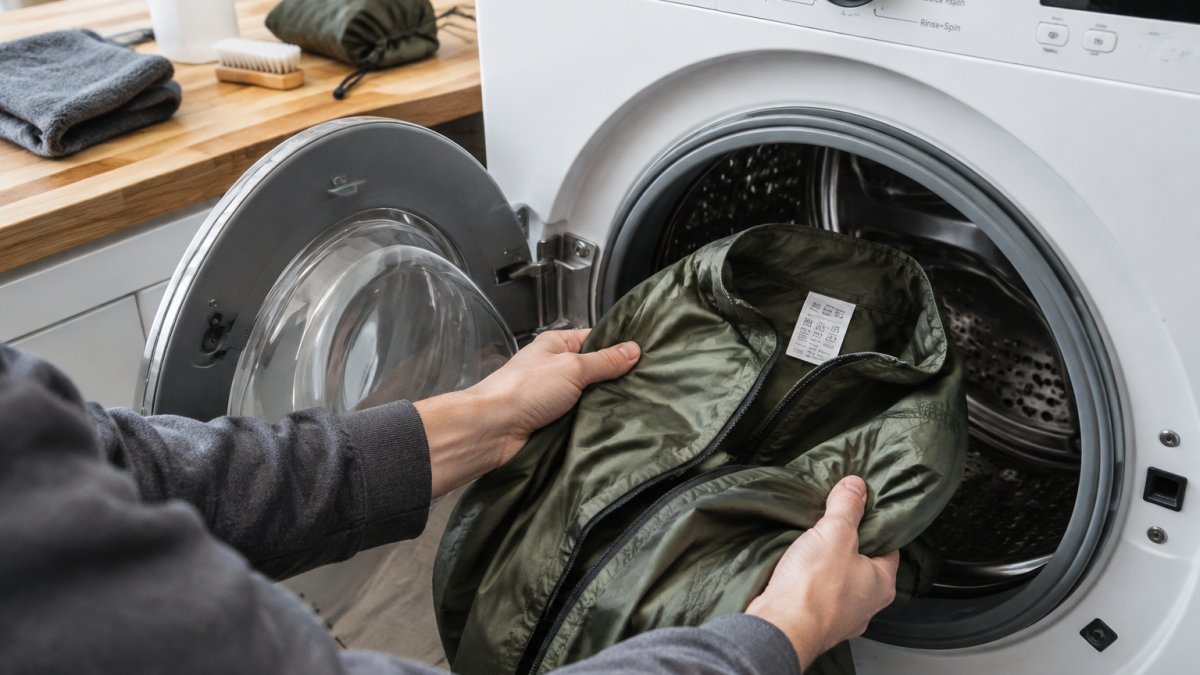
Machine washing is safe for many technical garments, provided you use the right detergent, a cool temperature and a gentle cycle, and the care label permits it.
Detergent, Water Temperature and Cycle Choice
Use a technical detergent, not regular household liquid. Standard detergents often contain fabric softeners, brighteners and perfumes that leave residue on technical fabrics, coating the fibres and killing breathability.
Set the machine like this:
- Detergent: technical or mild, non-biological, no softener
- Water: cold or lukewarm, never hot
- Cycle: gentle or delicate
Hot water and high heat are the two biggest enemies of waterproof-breathable fabric. They can damage the membrane and warp the DWR coating.
Wash Separately, Rinse Thoroughly, Air Dry in Shade
Wash technical garments separately from cotton, towels and anything with hooks or Velcro. Towels shed lint that clogs membranes. Velcro shreds delicate shells.
Rinse thoroughly. Detergent residue is the number one cause of poor performance after a wash, and an extra rinse cycle costs nothing.
Then air dry. Hang the garment in the shade, away from direct sun and radiators.
How to Clean Technical Apparel With Vinegar (and When Not To)
Vinegar can be a useful, cheap tool for odour and residue, but it is not a universal fix.
Use it for:
- Synthetic base layers that smell after one wear, especially polyester and nylon, which hold odour more stubbornly than natural fibres
- Towel-dried garments with a stiff, filmy feel, which usually signals detergent residue rather than dirt
- Occasional deep refreshes between technical washes, particularly for pieces worn against the skin
Skip it for:
- Anything with a waterproof-breathable membrane, unless the care label explicitly permits it. Prolonged acid exposure can degrade some membrane adhesives and seam tapes.
- Garments with a fresh factory DWR finish, where the priority is keeping the finish intact
- Coloured pieces you have not patch-tested, since acetic acid can shift some dyes
Never mix vinegar with bleach, the reaction releases chlorine gas. And never soak a waterproof jacket in vinegar for hours. Short rinses only, followed by a thorough cold rinse.
Watch out: vinegar is a maintenance aid, not a cleaner. It will not remove embedded body oils or grit, so use it between proper technical washes rather than instead of them.
Vinegar Versus Technical Cleaner: Which to Reach For
A common pattern is to treat vinegar and technical cleaner as interchangeable. They are not. Vinegar is a pH adjuster and mild deodoriser; a technical cleaner contains surfactants designed to lift oils and particulate dirt without leaving residue. Use vinegar for odour between washes, and a technical cleaner for the actual cleaning. If unsure, smell it and feel it: a sour smell points to bacteria, while a stiff or filmy hand points to residue, a job for a proper rinse or a technical cleaner, not more vinegar.
Nikwax Tech Wash and Other Technical Detergents Explained
Technical detergent is a cleaner formulated for synthetic fabrics and water-repellent finishes.
Nikwax Tech Wash is one well-known technical cleaner in this category. Other providers sell similar products, and the principle is the same: mild, residue-free, no softener.
What most guides miss is the two-product system. A cleaner maintains water repellency. A proofer restores it. They are not the same job.
A quick comparison:
| Product type | Job | When to use |
|---|---|---|
| Technical cleaner | Lifts dirt, sweat and oils | Every wash |
| Wash-in proofer | Restores DWR across the whole garment | When water stops beading |
| Spray-on proofer | Targets high-wear zones | When most of the jacket still beads |
How to Waterproof Jackets When Water Stops Beading
Water no longer beading on the surface means the durable water repellent has worn thin, not that the jacket is finished. But before you reach for a proofer, diagnose the cause. Reproofing a dirty or residue-coated jacket wastes product and can make performance worse.
How to Tell Whether You Need to Clean or Reproof
A dirty garment and a worn-out DWR look similar from a distance. The difference shows up in how water behaves:
- Water beads but beads sit flat and cling: usually surface contamination. Clean first.
- Water darkens the face fabric and soaks in within seconds: the DWR has failed. Clean, then reproof.
- Water beads in some zones but soaks in at shoulders, hood and cuffs: localised wear. A spray-on proofer targeted at high-wear zones is usually enough.
A simple test: pour a small amount of water on a clean, dry sleeve. If it beads and rolls off, the DWR is working. If it spreads and darkens the fabric, it is not.
Clean First, Then Reproof
Wash the jacket with a technical cleaner before any proofing. Proofing over dirt or detergent residue wastes the product and can leave a patchy finish.
Then choose your treatment:
- Wash-in proofer: treats the whole garment evenly. Best for older jackets with widespread wear across the whole shell.
- Spray-on treatment: targets shoulders, hood and cuffs. Best when most of the jacket still beads and only high-wear zones have failed.
Follow the product instructions for heat activation, usually a low tumble dry or a cool iron through a cloth, but only if the care label allows it.
Watch out: if water soaks through the fabric itself, not just the surface, and reproofing does not restore beading, the membrane has likely failed.
Fabric-Specific Reproofing Notes
Not all technical apparel reproofs the same way. Waterproof-breathable shells with a membrane need a cleaner and proofer formulated for membranes, and heat activation only if the label permits. Softshells often have a DWR on a stretch woven face and respond well to spray-on treatment. Fleece and synthetic insulation do not need reproofing at all, they need cleaning to restore loft and wicking.
Shop Mountain-Ready Layers Built to Be Washed and Worn
Good technical clothing is designed to be cleaned, not pampered. The right detergent, a cool gentle cycle and shade drying keep performance alive for years.
Our men's windbreaker top on the top pairs water-resistant fabric with a breathable mesh lining, so it layers easily and washes without drama. If you are weighing up whether premium pieces earn their keep, read are premium outdoor pieces worth it for women before you decide. And if the mountain look is what drew you in, what is gorpcore fashion style explains the aesthetic behind these layers.

Frequently Asked Questions
Can you wash technical apparel in a washing machine?
Yes, most technical apparel can go in a washing machine, but check the care label first. Use a mild detergent made for technical fabrics, choose a gentle or delicate cycle, and keep the water cool or lukewarm. Close all zips and fasteners, empty pockets, and wash items separately from heavy cotton or towels. Never use fabric softener or bleach. Air dry in the shade rather than tumble drying on high heat, which can damage water-repellent finishes and membranes.
What detergent should you use for technical clothing?
Use a mild, residue-free detergent designed for technical fabrics. Standard detergents often contain softeners, brighteners and fragrances that leave residue on waterproof-breathable fabric, which reduces breathability and water repellency. Avoid fabric softener and bleach entirely. If you use vinegar for odour, keep it to a small amount in the rinse and never mix it with other cleaners. A technical detergent protects the durable water repellent finish and keeps the garment performing.
How do you know when a waterproof jacket needs reproofing?
Watch how water behaves on the surface. If it beads and rolls off, the durable water repellent finish is still working. If water soaks in, the fabric looks dark and feels damp on the outside, or the jacket feels clammy inside, it is time to reproof. Clean the jacket first, then apply a spray-on or wash-in waterproofing treatment according to the product instructions.
Should you use fabric softener on technical clothing?
No. Fabric softener coats fibres with a waxy layer that blocks breathability and stops water repellency from working on waterproof-breathable fabric. It also traps odour in synthetic base layers and activewear. Skip dryer sheets for the same reason. If static is a problem, a breathable mesh lining, like the one in the men's windbreaker range, reduces it naturally. Wash with a technical detergent and air dry instead.
Cleaning technical apparel well is a habit, not a chore. Get the detergent, temperature and drying right, and your layers keep working season after season. Top on the Top builds mountain-inspired pieces with water-resistant fabric, breathable mesh linings and lightweight construction made for real wear. Explore the collection and keep your kit performing. Get started with Top on the Top and wear layers built to be washed, worn and worn again.
