
Last Updated: November 6, 2026
Quick Summary
Casual hiking gear for beginners is a filtering exercise, not a shopping list: buy for the walk you will actually do, on the terrain you actually have, in the weather your forecast actually shows. A workable kit fits in one small daypack and covers footwear, socks, layers, water, food, navigation and a small first-aid kit.
- Start slightly cool rather than warm, as you will heat up within ten minutes of walking.
- Allow roughly a thumb's width between your longest toe and the end of the shoe.
- A 20-25 litre daypack handles a half-day walk of two to four hours comfortably.
- UK daylight in December can fade by 3:30pm, so carry a head torch in winter.
- Rinse muddy footwear and dry it away from direct heat, as radiators degrade adhesives.
Table of Contents
- Start with the Right Casual Hiking Gear for Beginners
- Your Hiking Equipment List: What You Actually Need
- Day Hiking Essentials for Beginners: Pack by Route and Forecast
- What to Wear for a Casual Hike in UK Conditions
- Five Essential Things to Bring Hiking (and What to Leave at Home)
- Casual Hiking Gear You May Already Own
- Fit, Sizing and Comfort Checks Before You Buy
- Care, Maintenance and When to Replace Gear
- Build Your Kit at Top on the Top
- Frequently Asked Questions
Start with the Right Casual Hiking Gear for Beginners
The single most useful piece of advice we can give a new walker is this: casual hiking gear for beginners is not a shopping list, it is a filtering exercise. Most people overbuy before their first proper day out, then discover half of it stays in the cupboard. Buy for the walk you will actually do, on the terrain you actually have, in the weather your forecast actually shows.
The UK is a good test case. A lowland footpath in July asks something completely different from a Lakeland ridge in October, and the gap between the two is where beginners get caught out. More choice is not more clarity.
Below, we break the kit down into what you genuinely need, what you can borrow or already own, and what to leave at home. Top on the Top makes mountain-inspired clothing for people who want outdoor function and a distinctive look, so we have a clear bias: gear should work on the trail and still look right in town.
Your Hiking Equipment List: What You Actually Need
A workable hiking equipment list for a beginner fits in one small daypack. You need footwear you have broken in, socks that are not cotton, a base layer, a warm mid layer, a waterproof outer, water, food, a charged phone, a small first-aid kit and a head torch in winter. That is the whole core. Everything else is a refinement.
The mistake is treating equipment lists as checklists to complete rather than problems to solve. Each item on that list answers a specific failure: blisters, cold, rain, hunger, getting lost, a twisted ankle at dusk. Once you see the list that way, you can drop anything that does not answer a real risk on your route.
The Three-Layer System Explained
The three-layer system is a way of dressing that lets you adjust to changing conditions without carrying a wardrobe. A base layer sits against your skin and moves sweat away. A mid layer traps warmth. An outer layer blocks wind and rain.
- Base layer: polyester, nylon or merino wool. Never cotton, which holds water against your skin and chills you when you stop moving. A cheap gym top in polyester works fine; you do not need a specialist hiking brand for lowland walks.
- Mid layer: a fleece or light insulated jacket, easy to remove when you warm up on a climb. A 100-weight fleece is enough for most UK spring and autumn days; a 200-weight fleece suits winter lowlands.
- Outer layer: a windproof or waterproof shell, ideally with a hood and zipped pockets. Look for taped seams if you expect sustained rain; a water-resistant windbreaker is adequate for drizzle and wind.
Add or remove layers as you move. That is the entire technique. Start slightly cool rather than warm: you will heat up within ten minutes of walking, and starting warm means you will sweat and then chill when you stop.
Footwear, Socks and Fit Checks
Trail shoes or light hiking boots both work for casual walks, and the right choice depends on terrain rather than price. Choose boots for muddy, uneven or rocky ground where ankle support helps. Choose trail shoes for dry paths, towpaths and gentle woodland tracks, where they feel lighter and cooler.
Fit matters more than any specification. Try footwear on late in the day when feet are slightly swollen, wear the socks you will hike in, and check that you can wiggle your toes without your heel lifting. A common mistake is buying a half size too small because the shoe "feels snug". Snug becomes painful at kilometre eight. Allow roughly a thumb's width between your longest toe and the end of the shoe; your foot slides forward on descents and that gap prevents toe bruising.
Hiking socks are not an upsell. Wool or synthetic blends cushion the foot and dry faster than cotton. Take a spare pair. A common pattern is that beginners wear cotton sports socks, sweat, and then develop blisters on the first climb; a single pair of merino-blend socks often solves the problem without changing footwear.
Water, Food and Navigation
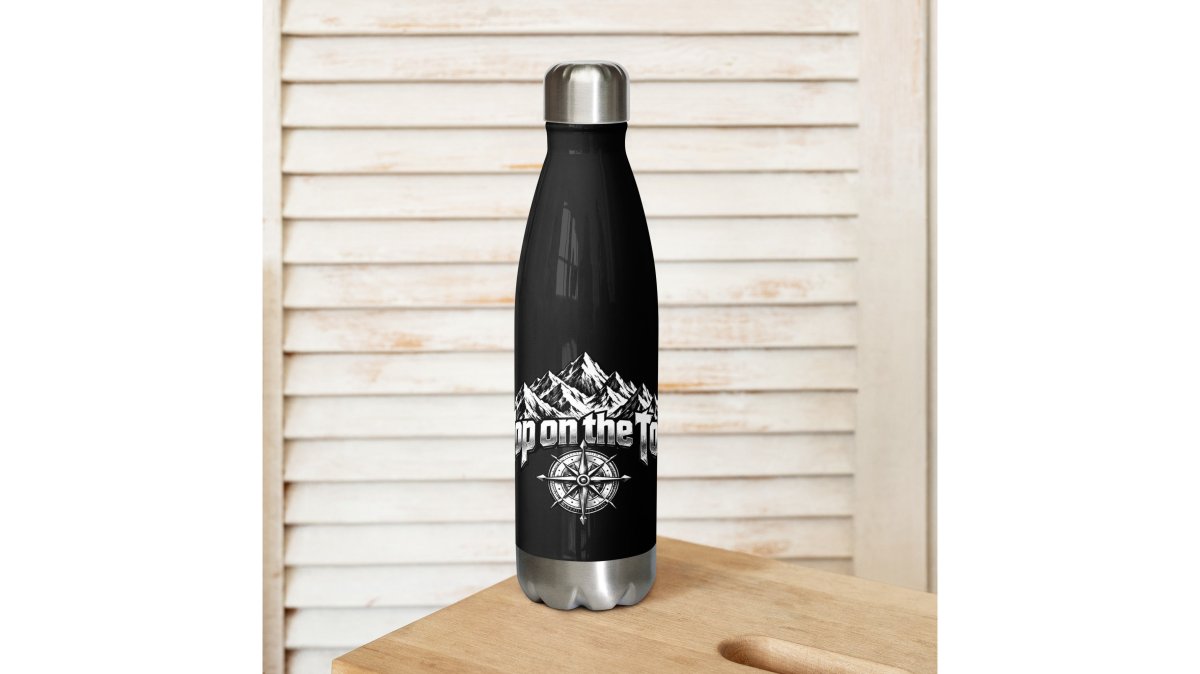
For hydration, a 500 ml stainless steel bottle is enough for a couple of hours in cool weather, and you should carry more in heat or on exposed ground. A larger bottle with a carry handle suits longer days and doubles as your everyday bottle. Shop our stainless steel water bottle if you want something that keeps a drink cold for the whole walk.

Food should be simple and familiar: a sandwich, a banana, a handful of nuts and a flapjack will cover a half-day walk. Avoid trying new foods on the trail; save the experimentation for home.
Navigation for casual walks usually means a charged phone with an offline map downloaded before you leave, plus a paper map if you are heading onto open ground where signal is unreliable. A simple compass and the ability to read a grid reference are worth learning, but for lowland footpaths a phone with a saved route is often sufficient. Ordnance Survey beginner map reading guide
First-Aid and Lighting
A small first-aid kit for casual hiking should cover blisters, minor cuts and a twisted ankle: blister plasters, a small roll of tape, antiseptic wipes, a couple of adhesive dressings and a lightweight elastic bandage. You do not need a full expedition kit for a two-hour walk.
A head torch is a winter essential and a summer nice-to-have. UK daylight in December can fade by 3:30pm, so any afternoon walk in winter should carry one. A basic 100-lumen head torch with fresh batteries is enough for a lowland path.
Day Hiking Essentials for Beginners: Pack by Route and Forecast
Day hiking essentials for beginners should be chosen by matching your pack to two variables: how long you are out, and what the forecast says. A two-hour walk on a dry path needs water, a snack, a shell and your phone. A six-hour hill day needs all of that plus a warm layer, a headlamp, a first-aid kit and a paper map or downloaded offline route.
Most beginner guides give you one long list and leave you to guess which items apply. A more useful approach is to sort your walk into one of three casual categories before you pack. This is the decision guide competitors tend to skip.
The Three Casual Walk Categories
Short lowland walk (under two hours, flat or gently rolling, good forecast). Carry water, a snack, a light windbreaker, your phone and a small first-aid kit. A 10-15 litre pack or even a waist pack is enough. This is the category where beginners overpack most; a two-hour towpath walk in July does not need a flask, a spare fleece or a headlamp.
Half-day walk (two to four hours, mixed terrain, changeable forecast). Add a warm mid layer, a waterproof shell rather than a windbreaker, a spare pair of socks and a paper map or offline route. A 20-25 litre daypack handles this comfortably. This is the most common casual hike in the UK, and the most common packing error is leaving the warm layer at home because the morning looked mild.
Full day on open or exposed ground (four to six hours, hills, coast or moorland). Add a headlamp, a proper first-aid kit, an emergency shelter or foil blanket, extra water and food, and a fully charged phone with a battery pack. A 25-30 litre pack is right. On exposed ground the wind can make a mild day feel cold, so the warm layer and shell earn their place even in summer.
How the Forecast Changes the Pack
A dry, still forecast lets you drop the waterproof trousers and carry a lighter shell. A wet or windy forecast means a hooded waterproof with taped seams, a dry bag or liner for your phone and spare layer, and waterproof footwear or gaiters if the path is muddy. A cold forecast means an extra mid layer and a hat and gloves, even on a lowland walk; extremities lose heat first and beginners underestimate this.
Pack capacity follows the same logic. Up to about 20 litres covers a short summer walk. A medium daypack in the 20-30 litre range handles a full day with layers and food. Anything larger is for overnight trips, and an oversized pack on a short walk just encourages you to fill it.
For hydration, a 500 ml stainless steel bottle is enough for a couple of hours in cool weather, and you should carry more in heat or on exposed ground. A larger bottle with a carry handle suits longer days and doubles as your everyday bottle. Shop our stainless steel water bottle if you want something that keeps a drink cold for the whole walk.
Watch out: the most common beginner packing mistake is scaling the pack to the bag you own rather than the walk you are doing. If your only pack is 40 litres, you will fill it, and you will carry weight you do not need on a two-hour path.
What to Wear for a Casual Hike in UK Conditions
What to wear for a casual hike in the UK comes down to expecting change. British weather shifts within a single afternoon, and the practical answer is a layering system plus a shell you can put on in seconds. Wind is the underrated factor: it strips warmth far faster than still air, even when the temperature looks mild.
A lightweight, water-resistant windbreaker with a hood, zipped pockets and elasticated cuffs is a practical layer for many walks. Explore our windbreaker, which is water-repellent with elasticated cuffs and a hood with a drawstring.

Watch out: cotton jeans and a cotton hoodie are the classic beginner error in UK conditions. Once wet, cotton stops insulating and stays cold against the skin, which is exactly the wrong behaviour when the wind picks up on an exposed section.
Five Essential Things to Bring Hiking (and What to Leave at Home)
Five essential things to bring hiking, if you strip the list to its bones, are water, food, weather protection, navigation and a way to call for help. Everything else is comfort. This is the test we apply to any item before it goes in the bag: does it address one of those five, or does it solve a problem you are unlikely to have?
What to leave at home matters just as much. A heavy flask, a full camera kit, a folding chair, spare shoes and a "just in case" third jumper all add weight that makes the walk less enjoyable. Weight is the enemy of casual hiking. Every extra kilogram is felt on every climb.
| Item | Why it earns a place | What to leave instead |
|---|---|---|
| Water bottle | Hydration on any route length | Heavy vacuum flask for short walks |
| Trail snacks | Steady energy, no sugar crash | Full picnic for a two-hour walk |
| Waterproof shell | UK weather changes fast | Bulky insulated coat in summer |
| Phone with offline map | Navigation and emergency contact | Separate GPS unit for lowland paths |
| Small first-aid kit | Blisters and minor cuts | Full expedition medical kit |
Casual Hiking Gear You May Already Own
Before you buy anything, audit your wardrobe. Casual hiking gear overlaps heavily with ordinary clothing, and most beginners already own a workable kit. A polyester gym top works as a base layer. A lightweight fleece from a high-street shop works as a mid layer. Running leggings or quick-drying trousers work on gentle paths.
The gorpcore trend has made this easier. Outdoor-look clothing is now mainstream fashion, so a windbreaker or trail shoe you bought for the city often performs perfectly well on a footpath. If you want to understand why that crossover happened, our guide on what gorpcore fashion style is explains the outdoor look and where it came from.
The items worth spending on are the ones that touch the ground and the weather: footwear, socks and a shell. Borrow or make do with the rest until you know you will keep walking.
Fit, Sizing and Comfort Checks Before You Buy
Fit is where online gear purchases go wrong, and mountain-inspired clothing is no exception. Before you buy, check three things: the layer you will wear underneath, the range of movement you need, and the return window if it does not work. A shell that fits over a t-shirt may not fit over a fleece, and a pack that feels fine empty will sit differently when loaded.
Run through this before you commit:
- Try the item on with the layers you will actually wear underneath
- Raise both arms and check the hem does not ride up
- Check cuffs and hem for adjustment you can tighten against wind
- Confirm the return window and whether tags must stay attached
- Read the size guide measurements rather than assuming your usual size
If you are between sizes in a shell, size up so you can layer. If you are between sizes in a base layer, size down for contact with the skin.
Care, Maintenance and When to Replace Gear
Gear lasts longer than most beginners expect, provided you look after it. Rinse muddy footwear and let it dry away from direct heat, because radiators degrade adhesives. Wash waterproof shells with a technical cleaner rather than standard detergent, and reproof them when water stops beading on the surface. Air out your pack after every walk and empty food wrappers out of the pockets.
Replace items when the failure is structural, not cosmetic. Worn-out tread on footwear, a delaminated shell, or a zip that will not stay closed are genuine reasons to replace. A scuff or a faded colour is not. Most beginners replace gear too early and too often, which is an expensive habit for a hobby you are still testing.
Build Your Kit at Top on the Top
Start with the shell, the bottle and the pack, then add layers as your walks get longer. That order keeps your spending proportional to how much you actually walk, and it means every purchase solves a problem you have already met on the trail.
At Top on the Top, we design mountain-inspired clothing that works on a footpath and looks right in the city. Our windbreaker is lightweight, durable and water-repellent, with a zipped closure, elasticated cuffs and two zipped pockets. Our daypack is water-resistant, with padded ergonomic straps, a laptop compartment and a soft mesh back. If you are choosing a bag for hikes and travel, our guide on how to choose mountain-inspired bags for travel covers the details.

Frequently Asked Questions
What gear should a beginner hiker have?
Start with footwear that fits well, a small daypack, a waterproof outer layer, a water bottle and snacks. Add a map or offline navigation app, a basic first-aid kit and a head torch for shorter daylight. Casual hiking gear for beginners does not need to be expensive: many items you already own, such as synthetic gym tops and leggings, work for low-level day walks. Build up only as your routes get longer or the forecast worsens.
What is the three-layer rule for hiking?
The three-layer rule is a base layer, a mid layer and an outer layer. The base layer sits against your skin and moves sweat away, so choose polyester or wool rather than cotton. The mid layer traps warmth, such as a fleece or light insulated jacket. The outer layer blocks wind and rain, like a waterproof shell. Add or remove layers as you climb and stop, so you stay comfortable without overheating.
Do beginners need proper hiking boots?
Not always. For casual day hikes on well-made paths, supportive hiking shoes or trail trainers with good grip are often enough. Choose boots if you expect mud, loose stone or ankle-deep puddles, or if you prefer ankle support. Whichever you pick, check fit before buying: try them with the socks you will hike in, leave a thumb's width at the toe and walk up and down stairs to check heel lift.
How much water should I take on a day hike?
Take at least 500 ml for every hour of walking, and more in warm weather or on steep climbs. A 500 ml insulated bottle fits most daypack side pockets and keeps water cold for up to six hours. For a half-day walk, 1 to 1.5 litres is a sensible starting point. Drink little and often rather than waiting until you are thirsty, and refill at cafes or taps on route where possible.
What should I pack for a short hike?
For a short day hike, pack water, snacks, a waterproof shell, a warm mid layer, a map or charged phone with an offline route, a small first-aid kit and a head torch. Add sun cream and a cap in summer. Keep the load light: a 15 to 20 litre daypack is enough for most half-day walks. Leave heavy cameras, multiple outfits and unnecessary gadgets at home to avoid overpacking.
What should you wear for a casual hike?
Wear moisture-wicking base layers, walking trousers or leggings you can move in, and a windproof or waterproof outer layer. Avoid cotton jeans and heavy hoodies, which soak up sweat and rain and dry slowly. Add a cap and sunglasses for sun, and carry a light fleece for exposed ridges. In the UK, a packable waterproof is worth carrying year-round because weather can change quickly on higher ground.
The challenge is not buying more gear, it is buying the right three or four pieces and learning to use them well. Get the shell, the bottle and the pack right first, and the rest of the kit follows naturally. Get started with Top on the Top and build a kit that works on the trail and still looks like you.
