
Last Updated: November 3, 2026
Quick Summary
Choose mountain-inspired bags by checking four things: water-resistant fabric, purposeful pockets, adjustable padded straps and a shape that suits your trip. Match capacity to how much you will actually carry, and check torso fit before buying, as a slightly smaller bag is nearly always more comfortable.
- Water-resistant polyester handles drizzle and damp platforms well.
- A 20-25 litre pack suits day hikes, city days and weekend breaks.
- Body-facing zips and a hidden back pocket make theft harder.
- Heavy items belong close to your spine and high in the pack.
- The backpack measures 41cm by 31cm by 10cm and carries up to 20kg.
Table of Contents
- What Makes a Bag Mountain-Inspired
- Best Crossbody Sling Bags for Travel: What to Look For
- Best Anti-Theft Sling Bag for Travel: Security Features That Matter
- Travel Backpacks for Adventure Trips: Capacity and Comfort
- Women's Mountain-Inspired Travel Bags: Fit and Style
- How to Match a Bag to Your Trip Type
- Shop Mountain-Inspired Bags at Top on the Top
- Frequently Asked Questions
What Makes a Bag Mountain-Inspired
Mountain-inspired bags for travel borrow the language of the trail and translate it for the city. That means earthy and muted colourways, hard-wearing fabrics, functional pockets and straps that look like they were designed for a summit push, then cut for a commuter train.
The distinction matters. Mountain-inspired is not the same as technical mountain equipment. A true alpine pack is engineered for load hauling over days, with frames, hip belts and hydration sleeves.
So what should you actually look for? Four things:
- Fabric that shrugs off weather. Water-resistant polyester is a common choice, and it handles drizzle and damp platforms well.
- Pockets with a purpose. A main compartment, a secure pocket for valuables, and somewhere sensible for a laptop.
- Straps you can adjust. Padded, ergonomic straps with regulators can make a difference on long days.
- A shape that suits your trip. Sling, crossbody, backpack or tote, each solves a different problem.
Get those right and the style takes care of itself. Get them wrong and you own a bag that looks the part but lets you down the first time it rains.
Best Crossbody Sling Bags for Travel: What to Look For
The best crossbody sling bags for travel sit close to the body, keep your hands free and give you quick access to the things you reach for most: phone, cardholder, tickets, a small water bottle.
Here is what separates a good sling from a frustrating one:
- Strap width and padding. A thin strap digs in after an hour. Look for a wider, padded shoulder strap that spreads the load.
- A secure main compartment. Zips that sit against your body, not facing outward.
- Easy access without full unpacking. You want to reach your phone without emptying the bag.
- Adjustable length. It should sit at hip or lower chest height, and stay there as you walk.
A common mistake is buying a sling that is too small for the day you have planned. If you carry a compact camera, a light layer and a water bottle, size up.
Sling bags can also work well as a second bag. Pair one with a larger travel backpack and you have a system: the backpack stays at the accommodation, the sling comes out for the day.
Best Anti-Theft Sling Bag for Travel: Security Features That Matter
An anti-theft sling bag for travel is not about gimmicks. It is about a handful of design choices that make opportunistic theft genuinely harder.
The features worth looking for:
- Body-facing zips. The main opening sits against your torso, so nobody can open it from behind.
- A hidden back pocket. A zipped pocket against your body is the safest place for a passport or spare cash.
- Closable, sturdy hardware. The top zip has two sliders with pullers.
- Close carry. A sling worn across the chest and pulled snug is harder to target than a bag swinging at your side.
Placement matters as much as hardware. A bag worn correctly across the body is a sensible approach to security. Wear it across your body, keep it in front on crowded transport, and keep the important items in the body-side pocket.
Watch out: a bag with a hidden back pocket is only useful if you actually use it. Move your passport and spare card into that pocket before you leave, not after you notice the crowds.
Travel Backpacks for Adventure Trips: Capacity and Comfort
Travel backpacks for adventure trips need to do two jobs: carry enough for the trip, and stay comfortable on long days of walking. The sweet spot for most people is a medium-sized pack with a well-organised interior rather than a cavernous one with a single void.
Capacity: match litres to the trip, not to worst-case packing
Capacity is the first decision, and it is where most people overbuy. A useful rule of thumb for mountain-inspired travel packs:
- 20-25 litres: day hikes, city days, a laptop and a light layer. This is the size most people actually need for a weekend break.
- 25-35 litres: one-bag city breaks of two to three nights, or a day hike with camera gear and a packed lunch.
- 35-45 litres: long-haul carry-on travel and multi-day hikes with hut stops. Check your airline's cabin dimensions before committing.
- 45 litres and above: expedition and camping use, where a proper frame and hip belt become essential.
A common pattern is that travellers buy a 40-litre pack for a two-night city break, then carry it half empty. A slightly smaller bag is nearly always more comfortable and easier to stow.
Comfort: load distribution, torso fit and strap adjustment
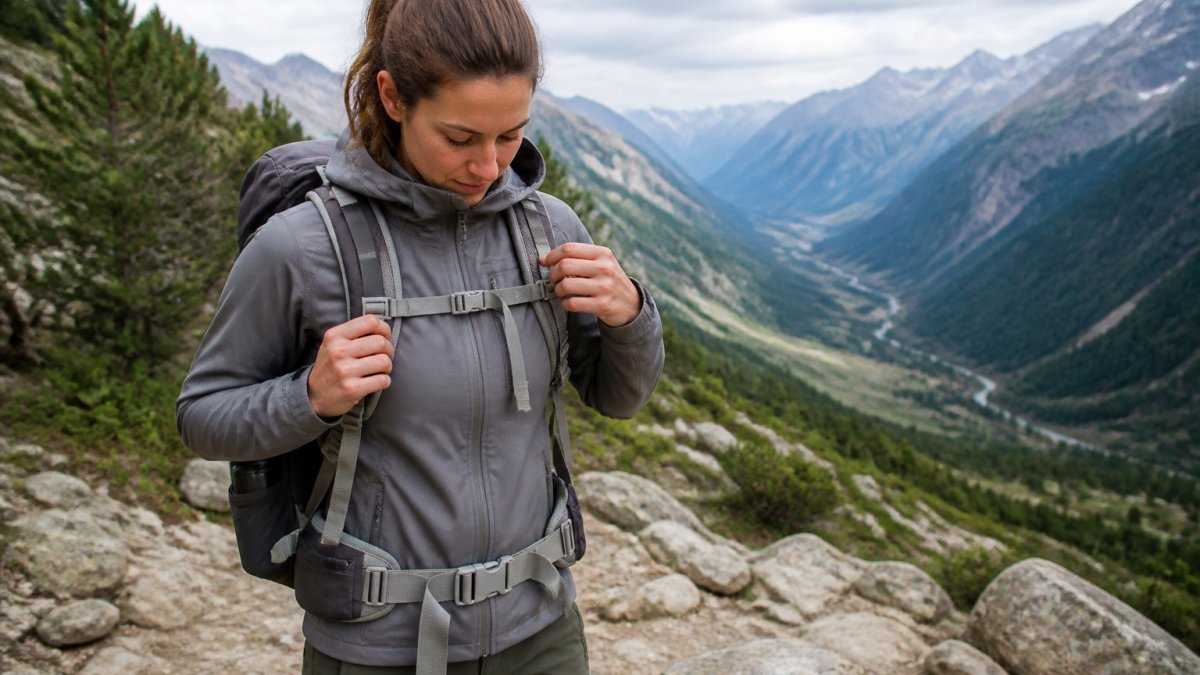
Comfort comes down to three things: padded straps, load distribution and a soft back panel. A mesh back keeps air moving on warm days. Adjustable straps let you shift weight between shoulders on a long walk.
Torso fit matters more than most guides admit. A pack that is too long for your back will sit away from your body and pull at the shoulders; one that is too short will ride high and feel unstable.
Load distribution follows the same logic. Heavy items belong close to your spine and high in the pack, with lighter items at the base.
Our mountain-inspired backpack
The Backpack top on the top is made from 100% polyester with a water-resistant material, measures 41cm by 31cm by 10cm, and carries up to 20kg. Inside you get a large pocket with a separate compartment for a 15-inch laptop, a zipped front pocket and a hidden zipped pocket on the back. The padded ergonomic bag straps come with plastic strap regulators.

The pack is designed for daily use and sports activities. Check your airline's cabin baggage rules before you fly.
Note that the pack has a maximum weight limit of 20kg.
Women's Mountain-Inspired Travel Bags: Fit and Style
Women's mountain-inspired travel bags need to solve a fit problem first and a style problem second. A bag that sits badly on a shorter torso or narrower shoulder line will annoy you all day, no matter how good it looks. This is the area most buying guides skip, so here is a practical approach to getting fit right before you commit.
Why torso fit matters more than bag size
Backpack sizing is usually quoted in litres, but the measurement that decides comfort is torso length, the distance from the base of your neck to the top of your hip bones. A pack designed for a longer torso will sit away from a shorter back, pulling at the shoulders and shifting the load onto the neck.
For slings and crossbody bags, the equivalent is strap adjustment range. A bag with a wide adjustment range can sit at hip or lower-chest height across different body types; a bag with a short strap will either sit too high or hang loose.
A practical fit checklist
Before you buy, run through these checks, ideally in a shop, or with a clear returns policy if you are buying online:
- The bag sits snug against your body when the strap is tightened, with no gap at the lower back
- You can reach the main compartment without taking it off
- The strap does not dig into your shoulder or neck, even when the bag is loaded
- The bag stays put when you lean forward or climb steps
- The sternum strap (if present) sits across the chest, not at the throat
- The hip belt (if present) wraps the hips rather than the waist
If you are between sizes or unsure, buy from a shop with a clear returns policy. Fit is the one thing you cannot judge from a product photo.
Style: let the bag carry the outdoor reference
On style, the mountain-inspired palette does a lot of work. Muted tones, earthy colourways and clean lines read as considered rather than costume. The trick is to keep the rest of your outfit simple and let the bag carry the outdoor reference.
Watch out: a bag that fits well in the shop can still rub on a long day if the strap edges are unpadded. Check the strap construction, not just the length, before you commit.
How to Match a Bag to Your Trip Type
Matching a bag to your trip is simpler than it sounds. Start with how much you will carry and how far you will walk, then pick the shape that fits.
| Trip type | Best bag shape | What matters most | Watch out for |
|---|---|---|---|
| City break, 2-3 days | Medium backpack plus sling | Cabin-friendly size, laptop pocket | Overpacking a daypack |
| Day hikes and trails | Backpack or sling | Padded straps, water resistance | Thin straps on long walks |
| Commute and daily carry | Sling or crossbody | Quick access, secure valuables | Bag too small for a laptop |
| Gym and short trips | Gym bag or tote | Capacity, durable fabric | No secure pocket for valuables |
| Long-distance walking | Backpack | Load distribution, comfort | Carrying more than you need |
For gym days and short trips, the all-over print gym bag top on the top is made from 100% polyester, is water-resistant, has a capacity of 30 litres, dual padded handles and an inside pocket for valuables.

The rule of thumb: match capacity to the trip, not to your worst-case packing. Most people carry less than they think, and a slightly smaller bag is nearly always more comfortable.
Shop Mountain-Inspired Bags at Top on the Top
Choosing well comes down to fabric, pockets, straps and fit, and then matching the shape to how you actually travel. Get those right and a mountain-inspired bag becomes the piece you reach for every weekend, not just on trips.
Top on the Top offers mountain-inspired apparel and accessories that blend outdoor aesthetics with contemporary style. Many of our bags feature water-resistant materials and practical storage. If you have a question about sizing or fit, get in touch with our team.
Frequently Asked Questions
What makes a bag mountain-inspired?
A mountain-inspired bag borrows design cues from hiking gear, such as durable fabrics, earthy colour palettes, functional pockets and rugged hardware, but is cut for everyday travel and city use rather than technical alpine conditions. It gives you the look of outdoor equipment without the bulk of a full expedition pack. Look for water-resistant materials, adjustable straps and a layout that keeps your essentials organised, so the bag works on a weekend hike and a city break alike.
Are mountain-inspired bags suitable for everyday use?
Yes. Most mountain-inspired bags are designed for daily carry as well as travel. A medium backpack or a crossbody sling with a padded strap can handle a commute, a day out or a short hike. The key is to match the size to your routine: a 20-litre backpack suits work and weekend walks, while a compact sling keeps valuables close in busy streets. Water-resistant fabric and secure zip pockets make them practical for British weather and crowded transport.
How do I choose a travel bag for both city trips and outdoor adventures?
Pick a bag that balances capacity, comfort and security. For city trips, a crossbody sling or anti-theft sling keeps passports and phones close and accessible. For outdoor adventures, a travel backpack with padded ergonomic straps and a laptop compartment covers both the trail and the train. Check the dimensions against cabin limits if you fly, and choose water-resistant material so a sudden shower does not ruin your gear. One versatile bag can cover both if you prioritise adjustable straps and a clean, neutral design.
What is the best anti-theft sling bag for travel?
The best anti-theft sling bag for travel combines a close-fitting crossbody strap with hidden or zipped pockets that sit against your body. Look for a bag you can wear across your chest in crowds, with a main compartment that closes securely and an internal pocket for valuables. Water-resistant fabric adds protection in rain. Avoid bags with open top flaps or thin straps that are easy to cut. A padded adjustable strap and a discreet design help you carry it all day without drawing attention.
The hardest part is not finding a bag that looks mountain-inspired. It is finding one that holds up when you actually use it. Top on the Top builds bags around that balance: water-resistant polyester, thoughtful pockets including a hidden back zip and a 15-inch laptop compartment, and padded adjustable straps for long days on your feet. Get started with Top on the Top and carry a bag that works as well as it looks.
