
Last Updated: 4 November 2026
Quick Summary
Gorpcore fashion is the practice of wearing technical outdoor clothing, the kind built for hiking, climbing and camping, as everyday streetwear. Shell jackets, fleece mid-layers, cargo trousers and trail shoes leave the trail and land on the high street, styled for the commute rather than the summit.
- Gorp stands for Good Old Raisins and Peanuts, the trail mix hikers have carried for generations.
- Outdoor recreation in the United States reached a record 175.8 million participants in 2023.
- One technical piece per outfit is safe, two is stylish, three needs a reason.
- Shell cuffs should sit at the wrist bone, not past the knuckles, to avoid a borrowed look.
- Dress for wind and rain first, warmth second, and let layers do the adjusting.
Table of Contents
- What Gorpcore Fashion Actually Means
- How Gorpcore Grew From Trail to Street
- The Key Pieces of a Gorpcore Wardrobe
- How to Style Gorpcore Without Looking Like You're Off to Summit
- Gorpcore Brands Worth Knowing
- Dressing for Different Climates and Seasons
- Getting Fit, Fabric and Budget Right
- Shop the Mountain-Inspired Look at Top on the Top
- Frequently Asked Questions
What Gorpcore Fashion Actually Means
Gorpcore fashion is the practice of wearing technical outdoor clothing, the kind built for hiking, climbing and camping, as everyday streetwear. Shell jackets, fleece mid-layers, cargo trousers and trail shoes leave the trail and land on the high street, styled for the commute rather than the summit.
That definition matters because it separates gorpcore from generic "outdoorsy" dressing. According to Printful's discussion of why gorpcore is trending, outdoor recreation in the United States reached a record 175.8 million participants in 2023, and that surge of people into the outdoors is exactly the cultural fuel the trend runs on.
At Top on the Top, we build our collections around that overlap: mountain-inspired design that works on a wet British hillside and still looks considered on a city street.
Where the Word Gorp Comes From
Gorp is trail mix. The acronym stands for "Good Old Raisins and Peanuts," the snack hikers have carried for generations. The suffix "-core" follows fashion convention, as in normcore or cottagecore, signalling a style built around a theme. So gorpcore literally means "trail-mix-core": the aesthetic of the person who packed snacks and proper layers for a long day outside.
How Gorpcore Grew From Trail to Street
The look did not arrive from nowhere. Climbing and hiking gear has drifted into urban wardrobes for decades, with skater style and techwear both borrowing functional details along the way. What changed is scale.
Gorpcore works by contrasting technical synthetics with natural fabrics and mixing bold colours against neutral tones. That tension is the whole trick: a hard-shell jacket over cotton, a bright fleece under a muted coat. Get the contrast right and the outfit reads as deliberate.
There is a genuine criticism here, and it is worth naming: some outdoor enthusiasts argue the trend borrows the appearance of hiking without the participation. Our view is simpler: wearing the kit is not a claim to have climbed anything.
The Key Pieces of a Gorpcore Wardrobe
A working gorpcore wardrobe rests on a small number of functional pieces that layer together. You do not need a full expedition kit. You need outerwear that handles weather, a mid-layer for warmth, trousers with real pockets, and footwear that copes with pavement and path alike.
The layering logic is the same one walkers use: a base layer to manage moisture, a fleece or insulated mid-layer for warmth, and a shell on top for wind and rain. Build the outfit in that order and it will function in the cold and look right in the city.
If accessories are where you want to start, our guide on how to choose mountain-inspired bags for travel covers the practical details.
Shell Jackets and Technical Outerwear
A shell jacket is the anchor piece. Look for a hood with a drawstring, a zipped front, elasticated cuffs and a water-resistant fabric, because those four details do most of the work in British weather. Breathability matters as much as waterproofing: a shell that traps sweat is worse than no shell at all on a climb.
Our men's windbreaker is built on exactly that brief, with a hood, elasticated cuffs, water-resistant fabric and a breathable mesh lining that reduces static. It has a regular fit and a zippable front, and it layers over long and short sleeve shirts.

Footwear and Functional Accessories
Trail shoes and hiking boots carry gorpcore's credibility. Technical trainers with grippy soles work for city wear; proper boots earn their place on wet ground. A backpack, a cap and a reusable bottle finish the look and do real work.
Our backpack is made from water-resistant material and has a large inside pocket with a separate compartment for a 15" laptop, a front zip pocket and a hidden zipped back pocket, with a maximum weight limit of 20kg. Pair it with our stainless steel water bottle, a 500ml double-walled flask that keeps drinks hot or cold for hours and has a leak-proof cap.


How to Style Gorpcore Without Looking Like You're Off to Summit
The difference between a styled gorpcore outfit and a costume comes down to restraint and proportion. Wear one or two technical pieces, then ground them with everyday clothing: denim, a plain tee, knitwear. A shell jacket with tailored trousers reads as fashion.
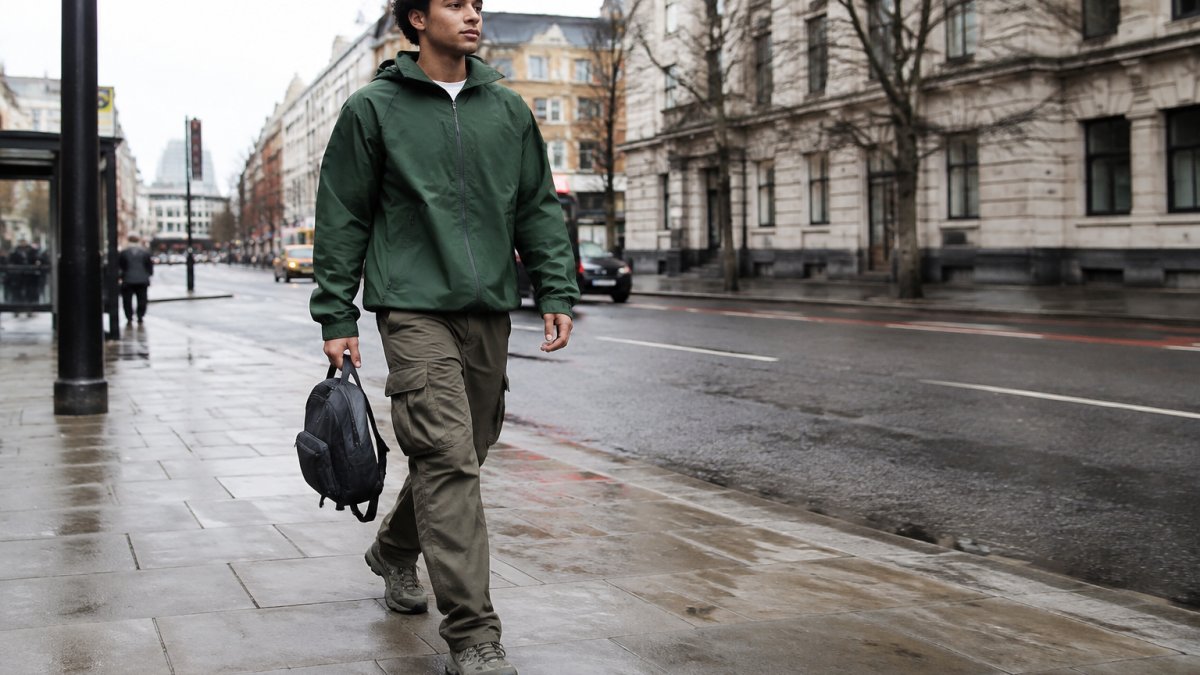
Keep the palette tight. Field Mag's contrast principle works best with two neutrals and one accent, so a charcoal shell over an olive fleece with a bright beanie lands well.
Fit and Proportion: The Part Most Guides Skip
Technical clothing is cut for movement, not for the high street, and that is where gorpcore outfits fall apart.
Sleeve length is the detail that gives away a poor fit. Shell cuffs should sit at the wrist bone, not past the knuckles, because excess length makes the whole outfit look borrowed.
Watch out: a waterproof shell with a dropped hem and long sleeves will look like a hand-me-down if you pair it with wide-leg trousers, the silhouette becomes a rectangle. Anchor it with a tapered leg or a cropped trouser that shows the shoe.
Building the Outfit in Layers
Start with the base: a plain tee or a light merino top in a neutral. Add the mid-layer, a fleece, a quilted gilet or a knit, and let one colour carry the outfit. The shell goes on top and should be the piece with the technical detail: taped seams, a drawstring hood, a chest pocket. If the shell is loud, keep the mid-layer quiet; if the mid-layer is bright, choose a neutral shell.
Footwear sets the register. Trail trainers with a grippy sole keep the look urban; hiking boots push it towards the outdoors. A backpack and a cap finish it, but stop at two accessories, a cap, a beanie, a bottle and a bag all at once tips into costume.
Three Outfits That Work
For a wet commute: a charcoal water-resistant shell over a grey merino tee, dark straight-leg trousers and trail trainers, with a compact backpack. For a weekend in town: an olive fleece over a white tee, black jeans and a cap. For colder days: a quilted gilet under a shell, a knit underneath, and boots, the layers do the warming without bulk.
The rule underneath all of it: one technical piece per outfit is safe, two is stylish, three needs a reason. If you cannot say why the third piece is there, take it off.
Gorpcore Brands Worth Knowing
The brands that define gorpcore fall into two camps: heritage outdoor labels with decades of mountaineering history, and newer lifestyle labels that design for the city first. Both are worth knowing, but they serve different buyers.
Top on the Top designs mountain-inspired apparel for people who want premium quality and a look that works in town. If you want to know what you are paying for, ask any brand three questions: what the fabric is, how the seams are finished, and whether they will repair it.
Dressing for Different Climates and Seasons
Gorpcore adapts to climate better than most trends because it was designed to. But most guides treat climate as an afterthought, offering the same layering diagram for a Scottish hillside and a London summer. The practical version is to build around the weather you actually get, starting with wind and rain rather than temperature.
British Rain and Wind
A British winter is rarely cold enough for heavy insulation and rarely dry enough to skip a shell. The working combination is a water-resistant shell with a hood, a fleece or light quilted mid-layer, and a base layer that moves moisture. Breathability matters as much as waterproofing: a shell that traps sweat leaves you clammy on a walk and cold when you stop. Look for pit zips or a mesh lining, and avoid wearing a waterproof shell over a heavy cotton hoodie, which soaks up sweat and dries slowly.
Watch out: a shell with no ventilation can feel uncomfortable on a mild, drizzly day, so breathability matters as much as waterproofing.
Cold, Dry Weather
When the temperature drops and the rain holds off, swap the fleece for a puffer or a quilted jacket and add a thermal base layer. The principle is the same: insulation traps warm air, the shell blocks wind. If you run warm, a gilet over a knit gives warmth where you need it without bulk at the arms.
Warmer Months
Summer is where most people overdo it. A lightweight windbreaker over a tee handles a breezy coastal walk and an evening in town; save the insulation for the shoulder months. Choose a shell with a packable design so it can go in a bag when the sun comes out, and pick lighter colours that reflect heat rather than absorb it.
A Simple Seasonal Rule
Dress for the wind and rain first, warmth second, and let layers do the adjusting. In practice that means: shell plus base layer in spring and autumn, add a fleece in winter, and drop to a windbreaker and tee in summer. The same wardrobe then covers a wet commute, a weekend walk and a cold snap without buying anything new.
Getting Fit, Fabric and Budget Right
Fit is where online outdoor shopping goes wrong most often. Technical clothing is cut for movement, so a jacket that fits snugly over a tee may not layer over a fleece.
Fabric choice decides how long a piece lasts. Synthetics dry fast and hold their shape; natural fabrics breathe well but need more care. Wash technical gear sparingly, on a cool cycle, and skip the fabric softener, which clogs breathable membranes.
Budget is the other lever. Buying fewer, better pieces beats a wardrobe of cheap shells that fail in the first downpour. Second-hand and outlet routes work well for heritage brands, and a well-chosen mid-layer from a premium label will outlast three fast-fashion versions.
| Decision | What to check | Why it matters |
|---|---|---|
| Fit | Size guide against your layering plan | Prevents a jacket that cannot layer |
| Fabric | Synthetic vs natural, care label | Determines lifespan and upkeep |
| Budget | Cost per season of wear | Fewer, better pieces last longer |
| Climate | Wind and rain first, warmth second | Matches kit to real conditions |
Shop the Mountain-Inspired Look at Top on the Top
The gorpcore wardrobe is not complicated: a shell that handles weather, a mid-layer for warmth, trousers with real pockets, footwear that grips, and accessories that carry your day. Everything else is styling.
Top on the Top builds premium, mountain-inspired apparel for people who want functional clothing that looks at home in the city. Our windbreakers pair water-resistant fabric with breathable mesh linings, and our backpacks are made from water-resistant material. Browse the full collection in our latest arrivals and find the pieces that fit how you actually dress.
Frequently Asked Questions
Is gorpcore still a thing?
Yes. Gorpcore fashion has moved from a niche internet trend into a steady part of how people dress, particularly in cities where weather changes fast. The look keeps appearing because it solves a practical problem: technical clothing handles rain, wind and cold better than most fashion pieces. Expect the aesthetic to keep evolving rather than disappear.
Why do they call it gorpcore?
The name comes from 'gorp', trail shorthand for Good Old Raisins and Peanuts, the snack hikers have carried for decades. Adding 'core' follows the fashion naming pattern used for other aesthetics. So gorpcore fashion literally means hiking-culture dressing: shell jackets, fleeces, cargo trousers and trail shoes worn as everyday streetwear rather than only on the mountain. The term is playful, but it describes a real shift in how outdoor wear is styled.
What are the essential items for a gorpcore wardrobe?
Start with a waterproof shell jacket, a fleece or mid-layer, and a pair of cargo or hiking trousers. Trail shoes or hiking boots finish the base. Add a technical backpack and a windbreaker for warmer, windier days. A lightweight windbreaker in particular works across seasons and layers easily over a long-sleeve shirt. Stick to a tight colour palette, such as forest green, black and off-white, so the pieces mix and match without effort.
How does gorpcore differ from traditional hiking gear?
Traditional hiking gear is chosen purely for performance on the trail. Gorpcore fashion keeps that performance but adds styling: bolder colours, contrasts between synthetic and natural fabrics, and pieces cut to work in the city. The same shell jacket might be worn over a hoodie to a coffee shop rather than up a ridge. Practicality still matters, but how the outfit looks alongside everyday clothes matters just as much, which is what separates the two.
The test of a good gorpcore outfit is whether it works in the rain and looks right in a cafe afterwards. Build yours around pieces that do both, and start with the layer you will wear most. Get started with Top on the Top and build a wardrobe that moves from trail to street without a change of clothes.
